-
 Call Now ! 7905582725
 -
 Email Now Help@makerspacekanpur.com
A tilt sensor (also called a ball switch or mercury switch) is a digital switch that changes its output based on orientation. When tilted beyond a certain angle, the internal mechanism (metal ball or mercury drop) makes or breaks contact, changing the signal.
Simple ON/OFF output
Detects if the object is upright or tilted
Digital signal (HIGH or LOW)
No orientation angle info — only tilt or no tilt
| Type | Inside it | Behavior |
|---|---|---|
| Metal ball type | Rolling metal ball | Conducts when level |
| Mercury type | Liquid metal drop | Conducts when tilted |
| MEMS Tilt Module | Accelerometer-based | Gives angle info |
We'll focus on the basic ball type, which is easiest to use with ESP32.
ESP32 board
Tilt sensor module (KY-017, SW-520D, or similar)
Jumper wires
LED (optional for output)
Inside the sensor is a small metal ball.
When upright → ball connects two metal contacts → Circuit closed → Output LOW
When tilted → ball breaks contact → Circuit open → Output HIGH (or floating)
Some modules have built-in pull-up resistors and LED to indicate state.
| Tilt Sensor Pin | ESP32 Pin |
|---|---|
| VCC | 3.3V or 5V |
| GND | GND |
| OUT | GPIO 14 (or any digital pin) |
Reads digital value from the sensor.
If LOW: the sensor is upright.
If HIGH: the sensor is tilted.
LED shows the state.
| Use Case | Description |
|---|---|
| 🛠️ Anti-Tamper Alarm | Alert when a box/device is moved |
| 🔒 Laptop Security | Lock or alert if tilted or stolen |
| 🎮 Game Controller | Basic motion control in DIY games |
| 🛑 Vehicle Crash Alert | Detect if a device tips over |
| 📦 Package Monitoring | Detect tilting during delivery/shipping |
| Problem | Fix |
|---|---|
| No response | Check VCC, GND, and OUT connection |
| Inverted readings | Try changing logic (HIGH/LOW check) |
| Floating output | Add external pull-up/down resistor |
| No LED on module | Try tilting more or check supply voltage |


As per official documentation Step by step process for pico program run after power on:Save your pyt...

ESP32 Board are so popular? Mainly because of the following featuresLow-costBluetoothWiFiLow PowerDu...

Node MCU ESP8266 Board are so popular? Mainly because of the following features.Its true Arduino Kil...

🔧 Basic IntroductionL298N is a dual H-Bridge motor driver IC that allows controlling the direction...

🔧 Components Needed:ComponentQuantityESP32 Dev Board1L298N Motor Driver Module1DC Gear Motors (TT o...

The ADXL335 is a small, thin, low-power 3-axis analog accelerometer manufactured by Analog Devices....

🧠 What is an Ultrasonic Sensor?An ultrasonic sensor is a device that uses sound waves to detect how...

📌 What is the DHT11 Sensor?The DHT11 is a basic, low-cost digital temperature and humidity sensor....

🔥 FIRE BOT – Bluetooth Controlled Fire Extinguisher RobotWelcome to the FIRE BOT project! This robo...

BMP180 Sensor: Digital Barometric Pressure SensorThe BMP180 is a digital barometric pressure sensor...

🔧 1. Hardware Overview: 1.8" TFT DisplayMost 1.8" TFT modules are based on the ST7735 driver and co...

The SSD1306 is a popular controller used in OLED (Organic Light Emitting Diode) displays, most commo...

A servo motor is a type of motor designed for precise control of angular position, making it ideal f...
.png)
The Gravity Voice Recognition Module is a user-friendly module developed by DFRobot that allows micr...
.png)
The APDS-9960 is an advanced, compact sensor from Broadcom (formerly Avago Technologies) that offers...

🔍 What is the 28BYJ-48 Stepper Motor?The 28BYJ-48 is a 5V unipolar stepper motor with a built-in re...

How Soil Moisture Sensor Works and Interface it with Esp32 When you hear the term “smart garden,” on...

🔧 What is an Analog Joystick?An analog joystick typically has:2 potentiometers (one for X-axis, one...

📡 What is the NEO-8M GPS Module?The NEO-8M is a high-precision GNSS GPS receiver by u-blox, capable...

🔧 What is a NeoPixel?NeoPixel is Adafruit’s name for individually addressable RGB LEDs using the WS...

🧠 What is a PIR Sensor?PIR = Passive Infrared SensorA PIR sensor detects motion by measuring change...

✅ What is AI Thinker GP-02?The AI Thinker GP-02 is a GNSS (GPS) module, designed to work with satel...

📡 What is SIM900?The SIM900 is a GSM/GPRS module from SIMCom. It allows microcontrollers like ESP32...

🧠 What is a Push Button?A push button is a simple mechanical switch that connects two points in a c...

🎨 What is the TCS34725?The TCS34725 is a color sensor made by AMS (now part of Renesas).It detects...

📘 What is an I2C LCD?An I2C LCD is a Liquid Crystal Display that uses the I2C communication protoco...

🧠 What is MPU6050?The MPU6050 is a 6-axis motion tracking device made by InvenSense. It combines:✅...

🌡️ What is DS18B20?The DS18B20 is a digital temperature sensor from Maxim Integrated (now Analog Dev...

⏰ What is DS1307 RTC?The DS1307 is a real-time clock IC by Maxim Integrated that keeps track of:Sec...

🎵 What is DFPlayer Mini?The DFPlayer Mini is a tiny, standalone MP3 audio player module. It can pla...

📡 What is an IR Receiver?An IR (Infrared) Receiver module receives signals from an IR remote contro...

📌 What is a Rotary Encoder?A rotary encoder is an electro-mechanical sensor that converts the angul...

📌 What is the Dot Matrix Display with MAX7219?A Dot Matrix Display is an arrangement of LEDs in a g...
.png)
📌 What is ESP-NOW?ESP-NOW is a wireless communication protocol developed by Espressif, allowing ESP...
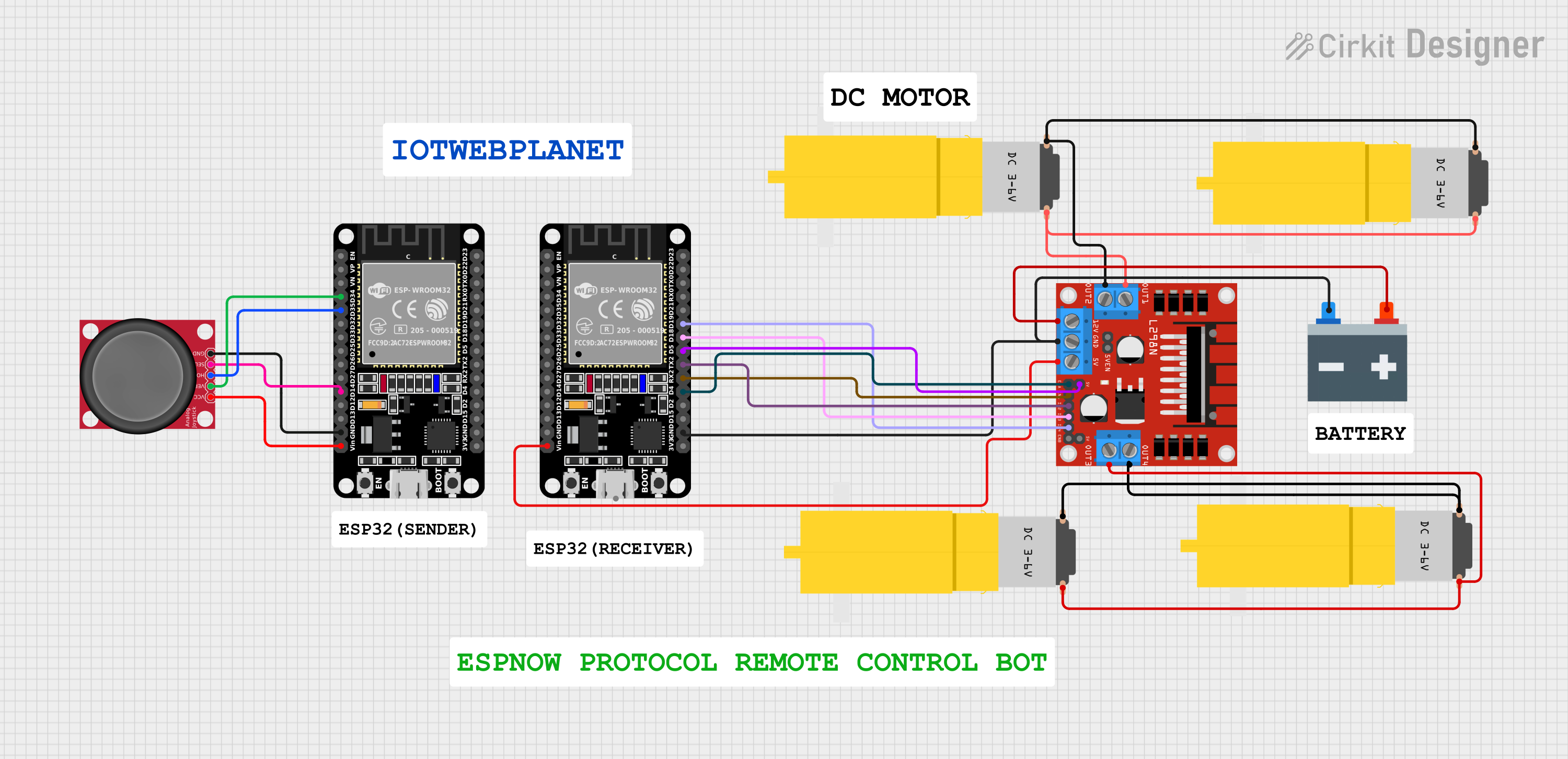
🤖 ESP32 Joystick Controlled Robot Using ESP-NOW Protocol & L298N Motor DriverWireless bot control w...
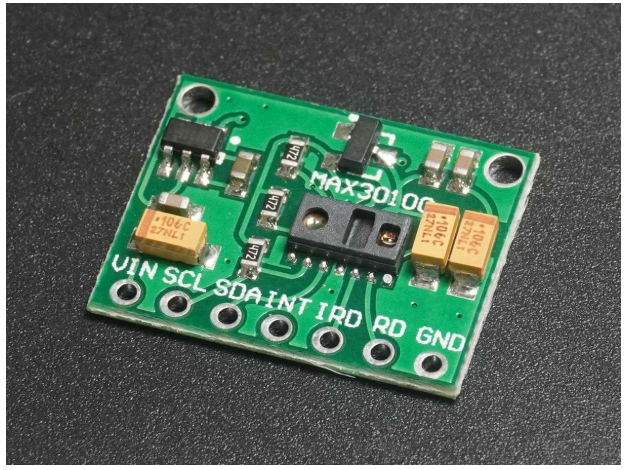
❤️ Heart Rate & SpO₂ Sensor (MAX30100/MAX30102)🔬 Pulse Sensor | SpO₂ Monitor | Wearable Health Tech...
